
Inside Qwabi Private Game Reserve: An Honest Review (Babohi, Big Five, Malaria-Free)
Jul 1
17 min read
I spent time at Babohi, the adults-only flagship lodge inside Qwabi Private Game Reserve, on a hosted trip. This is my honest read on the reserve: what it does well, where it falls short, and who should book it.

Qwabi is a malaria-free, Big Five private reserve in the Waterberg region of Limpopo, roughly three hours by road north of Johannesburg. It covers about 11,000 hectares inside the Waterberg Biosphere, one of only two UNESCO-declared savannah biospheres in Africa. There are three lodges on the reserve, all run by Newmark Hotels & Reserves: Babohi (adults only, where I stayed), Letamo (the larger family lodge), and Semela (geared to groups and buyouts). The Big Five are here, along with cheetah and strong birdlife, and you rarely see another vehicle. What you trade for that access and quiet is the drama of a bigger, wilder system. Qwabi is a well-run, low-friction first safari and a genuinely good malaria-free option close to Johannesburg. It is not the place to chase mega-herds or shifting predator territories.
If you are weighing Qwabi against the Sabi Sands or a Kruger camp, read the comparison section below before you decide. The honest answer depends entirely on what you want from the trip.
ASM Verdict
The short version: I came away more impressed than I expected. Babohi was beautiful, the food and service were strong, the spa was genuinely good, and what surprised me most was the landscape, red sand into grassland into bush into mountains, like several small ecosystems stitched together.
What Qwabi does well: Genuinely malaria-free and easy to reach from Johannesburg, which makes it a low-stress first safari and a sound choice for families and older travellers. Few lodges on a large reserve, so sightings feel private and unhurried. Excellent food, warm service, and a good spa. Unusually varied terrain for one reserve, red sand through grassland, bush, and mountains, on that distinctive red Waterberg earth. A Big Five reserve with reliable general game, cheetah, good birding, and a genuine conservation story.

Where it falls short: At 11,000 hectares with actively managed predator numbers, the wildlife is steadier and more predictable than a larger open system. Predators can be hit and miss: the two lion prides are small and not always found, and we did not see leopard at all on our stay. No wild dogs. The guiding is capable and strong on regional knowledge, but not the tracker-led, animal-finding standard of a top Sabi Sands or Okavango camp. The final stretch of access road is gravel and rough in the wet. Guest reports on Babohi are strong overall but not spotless, with the occasional check-in or housekeeping wrinkle.
Best for: First-time safari-goers, families with children (at Letamo), couples and honeymooners wanting quiet luxury without malaria cover (at Babohi), and anyone flying into Johannesburg who wants a short, comfortable, high-quality bush trip.
Not ideal for: Second- or third-time safari travellers chasing predator density, big herd movement, or the rawness of an unfenced ecosystem. If that is the priority, the Sabi Sands or a good Kruger concession will serve you better, malaria cover and all.
Bottom line: Qwabi is very good at a specific job, and the mistake is judging it by the wrong one. As a short, polished, malaria-free Big Five safari within a drive of Johannesburg, at a price well below the Sabi Sands or Botswana, it makes a strong case. Do not book it expecting the wildlife theatre of the Serengeti or Sabi Sands. It rewards two or three nights, not a week.

What Qwabi is actually like
I have photographed safaris across much of the continent, and most reserves settle quickly into a single character. Qwabi does not. The landscape genuinely changes as you drive it: red sand in one section, open grassland in the next, then thick bush, then mountains. It reads like a set of small ecosystems stitched together, and that is a big part of why the place is so beautiful and why the drives never felt repetitive over a couple of days. The red earth is striking on its own in the low light of early morning and late afternoon, and it gets onto everything, including the warthogs, which come up a dusty red from wallowing in it.

The wildlife delivered without the reserve feeling staged. A cheetah walked directly in front of our vehicle at sunset, close enough that nobody spoke. I saw Ground Hornbills three times in two days, which matters because they are endangered and Qwabi runs an active programme to protect them. And I watched elephants come down to drink while I was in the plunge pool off my room, which is the kind of quiet, private moment that a busy reserve simply cannot give you. The nights are their own event, too. With almost no light pollution, one evening our guides stopped the drive and turned it into a stargazing session, what the lodge calls its star rangers picking out the constellations of the southern sky.
That privacy is the real product here. With only a few lodges spread across 11,000 hectares, you are not queueing at a sighting or working around ten other vehicles at a leopard. You get the bush more or less to yourself.
The lodge itself lived up to the setting. Babohi's food and service were genuinely excellent, and the staff were warm in a way that felt real rather than rehearsed. The spa was a highlight, and I had one of the better bush massages I have had anywhere. None of that is why you choose a safari, but it is a large part of why a short one at Qwabi feels like a proper break rather than a compromise.
Where Qwabi is, and how to get there
Qwabi sits in the malaria-free Waterberg of Limpopo Province, about 60km from the town of Bela Bela. Babohi is roughly 147km from O.R. Tambo International Airport in Johannesburg, a drive of about two and a half to three and a half hours depending on traffic and where you are staying on the reserve.
Most of the route is tarred. The last stretch, around 30 to 35km, is gravel, and it can get rough after rain, so a high-clearance vehicle is worth having. From the main gate, the lodges are another 30 minutes or so by lodge vehicle through the reserve. The gate closes at 18:00, so plan your arrival for daylight or arrange a later entry in advance.
Self-drive is straightforward. If you would rather not drive, road transfers can be arranged, and there is a helicopter option for anyone wanting to skip the road entirely. For international travellers, the usual shape is a night or two in Johannesburg or Cape Town, then Qwabi as the safari leg, which works well precisely because it is so easy to reach.
The three lodges at Qwabi: which one is right for you
This is where a lot of write-ups get muddled, so to be clear: there are three lodges on the reserve, not four. They share the same wilderness but serve very different travellers.

Babohi
Babohi is the adults-only flagship and the lodge I stayed at. It takes guests aged 16 and over, which is the point: it is quiet, grown-up, and designed for couples, honeymooners, and anyone who wants the bush without children around. There are 25 rooms across five categories, from Deluxe Rooms up to Premium Rooms with private plunge pools and fireplaces, double-storey Suites, and a Presidential Suite. Rooms open to the bush, the rim-flow pool overlooks a valley, and there is a bush-facing spa and gym. Rates are all-inclusive, covering breakfast, high tea, dinner, two game drives a day, and laundry. It is luxurious, but it has warmth to it, which is not always a given at this tier.

Letamo
Letamo is the largest lodge on the reserve and the one built for families. It has 58 rooms, including suites with private plunge pools, plus two pools, a spa, a boma, and a dedicated kids' club with supervised activities, a play area, and a padel court. Children of all ages are welcome, and younger children can join family-appropriate game drives. I did not stay at Letamo, so I will not pretend to review the experience, but on the reserve's own terms it is the clear choice for anyone travelling with kids who wants a malaria-free bush trip without a long transfer.
Semela
Semela is the third lodge, positioned for groups, corporate getaways, and buyouts, with 24 rooms and its own pool, restaurant, and bush bar. For most couples and families it is not the one you would book directly, but it is useful to know it exists if you are organising a larger private group.
For a deeper look at the flagship, see the Babohi Lodge review.
Wildlife and game viewing: the honest version
Qwabi is a genuine Big Five reserve. Lion, elephant, buffalo, leopard, and rhino are all present and free-roaming, alongside cheetah, giraffe, zebra, hippo, sable, eland, and brown hyena. The reserve records more than 5,500 species in total, and there is a Cape vulture breeding colony nearby, so the birding is a real draw and not an afterthought. There are two lion prides on the reserve, and because of the low vehicle numbers, sightings of them feel calm rather than crowded.
Be realistic about the marquee predators, though. On our stay we saw a great deal but not leopard. They are present on the reserve, and I honestly cannot tell you how reliable sightings are, only that we did not get one. The lion prides are small, one or two of them, and whether you connect with them on a given drive felt a little hit and miss. That is the honest shape of a smaller reserve: strong on general game, less certain on the big cats than a Greater Kruger reserve where leopard turn up almost daily.

Here is the trade-off, and it is the most important thing to understand before you book. Eleven thousand hectares is a substantial private reserve, but it is not an open system. Predator numbers are managed to keep the ecosystem in balance, which means you are more likely to encounter known prides and established territories than surprise newcomers. That is an upside for consistency: you are unlikely to draw a blank on the big animals. It is a limitation if you are hoping for dramatic territorial shifts, rival predator clashes, or the roaming mega-herds you would see in Kruger or the Serengeti. There are also no wild dogs at Qwabi, because they need far larger ranges than the reserve can offer.
Over a two- or three-night stay this rarely matters, and most guests leave having seen a lot. On a longer stay, the movements can start to feel predictable. Drives run twice daily in open vehicles, morning and afternoon or evening, and off-road tracking is permitted for Big Five sightings, which helps. Guided walking safaris are offered too, for guests sixteen and over, and they are the best way to pick up the smaller detail the vehicles drive past.

The guiding
The guiding at Qwabi was solid. The guides knew the Waterberg well, were strong on local and regional knowledge, and were genuinely friendly. I came away having learned a lot about the area, which is not always the case even at more expensive camps.
Where it does not match the very top tier is in tracking. At the best Sabi Sands and Okavango camps you have a dedicated tracker working alongside the guide, actively finding animals and following them across a large traversing area. Qwabi does not run that system, and the reserve gives guides a more limited network to work, so it can feel like there are fewer places to go and fewer angles to try when an animal is not showing itself. If your priority is world-class, tracker-led guiding and the thrill of a genuine hunt for a sighting, that is a real difference. If you want capable, informative guides on a comfortable, low-pressure safari, Qwabi's are more than up to it.

How Qwabi compares: is it the right malaria-free choice for you?
If malaria-free is a hard requirement, which it is for most families with young children, Qwabi is a strong option, but it is not the only one, and it is worth being clear about what it is and is not competing with.
Against the Sabi Sands or a private Kruger concession, Qwabi loses on wildlife density and predator action. Those reserves sit within the Greater Kruger and deliver higher big-cat frequency and the intensity of a larger system, but they carry low malaria risk in the dry season and higher risk in the wet, and they cost more. If wildlife concentration is your single priority and malaria cover is acceptable, they are the better call.
Within the malaria-free Waterberg itself, Qwabi's nearest comparisons are reserves like Welgevonden and the more upmarket Marataba inside Marakele National Park. The honest framing for the whole region is the same one that applies to Qwabi: you are choosing the Waterberg for proximity to Johannesburg, the malaria-free factor, and lodge atmosphere, not for the highest predator density in the country. Qwabi's edge is its low lodge count and the privacy that comes with it.
For the full picture of where Qwabi fits, see our guides to malaria-free safaris in South Africa and the best luxury safaris in South Africa.
How Qwabi came to be, and why it matters
Qwabi makes more sense when you understand it as a restoration project rather than just a lodge address, because that explains both what it is and where it still falls short.

The land was heading somewhere very different. In the 2000s this corner of the Waterberg was lined up for a residential golf estate and hotel development. That plan was abandoned when the property was sold in 2010, and instead of fairways it became a private game reserve. What has happened since is a genuine rewilding effort: the Big Five reintroduced, a sustained veld-rehabilitation programme, old fence lines and invasive alien plants removed, and a serious in-house conservation team led by a translocation specialist who serves as vet and CEO and an ecologist with an invasive-species background. The reserve runs a perimeter of around 60km and a road network of roughly 350km, and it has taken a deliberate approach to genetics, bringing in black-maned lions of Kalahari bloodline and elephants from big-tusk lines rather than simply stocking animals.
There is real innovation here too. Qwabi has fitted what it describes as a South African first, a specialised predator collar carrying a GPS tracker, camera, microphone, and accelerometer, to study its cats in a way few reserves anywhere have attempted. It sits inside the Waterberg Biosphere, an area SANBI rates as a critical biodiversity area, and the reserve is active in the wider Waterberg conservation community, from a regional rural conservation association to funding anti-crime camera networks and pushing back on mining in the area.
This is the honest reframing of the trade-off I kept coming back to. Qwabi does not have the ancient, sprawling predator dynamics of Greater Kruger or the Serengeti because it has not existed long enough to. What it has instead is a carefully managed, malaria-free, highly accessible Big Five reserve with unusually varied scenery and a serious restoration story still being written. If that appeals to you, it is a more interesting place to spend two or three nights than its size alone would suggest.
What Qwabi costs
Pricing is all-inclusive and varies by lodge, room category, and season. As an indicative guide for 2026, Babohi's published entry rates start around R10,900 to R12,800 per night for two people sharing, which works out to roughly $300 to $360 per person per night at mid-2026 exchange rates. Premium rooms with plunge pools and the larger suites run higher, and peak holiday dates carry surcharges. On top of the room rate there is a conservation levy of around R510 per adult and R305 per child per night, and transfers, spa treatments, and extras are billed separately.
Treat those numbers as a starting point rather than a quote. They shift with the rand, the season, and residency rates, and international rack rates can differ from the local pricing shown on booking sites. What they tell you is the tier: Qwabi sits in the mid-band of malaria-free South African safari lodges, comfortably below the Sabi Sands, which is where a lot of its value case lives for a first safari.
That value gap is real, and it is worth being precise about what drives it. On my stay the lodge, the food, and the service sat comfortably alongside places I have paid far more for in the Sabi Sands, Botswana, and the Okavango. You are paying less at Qwabi mainly for the smaller reserve and the lighter wildlife dynamics, not for a weaker lodge.
For a current, accurate figure tailored to your dates and group, use our planning service below, or approach the lodge directly.

When to visit
Qwabi works year-round, helped by its elevation and the malaria-free setting.
The dry season, roughly May to September, gives you thinner bush, easier game viewing, and the golden bushveld tones, with cold early mornings and evenings, so pack warm layers. The green season, October to April, brings lush scenery, excellent birding, newborn animals, and warmer days with afternoon rain. Neither season is wrong. Dry is the safer bet for a first-timer focused on sightings; green rewards photographers and birders who do not mind the bush being thicker.

How this squares with other guests
My read is a first-hand one from a single stay, so it is worth saying that it lines up closely with the broader guest picture. Across the main review platforms, sentiment for Babohi runs strongly positive, with the same things coming up again and again: the staff, the food, the rooms and views, the peace of the place, and the game drives. Several guests note that the price is easier to justify once you factor in that meals, drinks, drives, and spa are included.
The recurring gripes are consistent too, and they match what I would flag: the access road, the odd insect in a room, occasional noise carrying from other guests, and a minority who found the buffet-style food or the spa less impressive than the rest. Wider Qwabi reviews, including for the family lodge, add group noise and management presence to that list, which is worth keeping in mind if you are booking the reserve broadly rather than Babohi specifically.
Qwabi Pros and cons
Pros
Genuinely malaria-free, so no antimalarials and family-friendly
A Big Five reserve with good general game, cheetah, and strong birdlife
Few lodges on a large reserve, so sightings feel private and uncrowded
Easy access from Johannesburg, a short drive rather than a connecting flight
Unusually varied terrain in one reserve: red sand, grassland, bush, and mountains
Strong value: a lodge, food, and service that stand next to far pricier Sabi Sands and Okavango camps
Excellent food and warm service, a good spa, with full board and laundry included
A serious conservation and rewilding story, from Big Five reintroduction to first-of-its-kind predator research
Distinct lodges for distinct travellers: adults-only, family, and groups
Cons
No wild dogs, which the reserve size cannot support
Managed predator numbers mean steadier, more predictable dynamics than an open system
Small lion prides that are not always found, and leopard we did not see on our visit
Solid guiding, but not tracker-led, with fewer areas to work than a large reserve
Over a longer stay, drives can start to feel familiar
The final stretch of access road is gravel and rough after rain
All game viewing is guided, with no self-drive inside the reserve
Guest reports on Babohi are strong overall but not flawless, with occasional check-in or housekeeping wrinkles

Planning a trip to Qwabi or the Waterberg
Every lodge, reserve, and operator we write about is editorially assessed on its merits. No company paid for inclusion in this review, and we have no commercial relationship with Qwabi or Newmark. This was a hosted visit for editorial purposes, and the judgment above is our own.
Most readers will use this review to decide whether Qwabi fits, then book directly or through a planner they trust. The trade-offs above are written for exactly that.
If you would like help deciding, whether Qwabi is right for you, which lodge suits your group, or how it compares to other malaria-free options, use our planning service. We review your enquiry and route you to a safari specialist we rate, based on fit. It is free, there is no obligation, and we only earn a commission if a booking results.
Read next: Malaria-Free Safaris in South Africa · Best Luxury Safaris in South Africa · Welgevonden Game Reserve · South Africa Safari Hub
Frequently Asked Questions
Where is Qwabi Private Game Reserve?
Qwabi is in the Waterberg region of Limpopo Province, South Africa, about 60km from Bela Bela and roughly a three-hour drive north of Johannesburg. It sits inside the Waterberg Biosphere, one of only two UNESCO-declared savannah biospheres in Africa.
Who owns Qwabi Private Game Reserve?
Qwabi is a privately owned game reserve that forms part of the Newmark Hotels & Reserves portfolio, which operates its three lodges. Newmark's other reserves include Motswari in the Timbavati near Kruger, Nkomazi in Mpumalanga, Mount Camdeboo in the Eastern Cape, and the Serengeti Sojourn mobile camp in East Africa.
Does Qwabi have the Big Five?
Yes. Qwabi has free-roaming populations of lion, elephant, buffalo, leopard, and rhino, along with cheetah, giraffe, zebra, hippo, and a wide range of antelope and birdlife.
Is Qwabi malaria-free?
Yes. Qwabi is in the malaria-free Waterberg, so no antimalarial medication is needed, which is a large part of why it suits families with young children and first-time safari-goers.
Is Qwabi a good first safari?
For most people, yes. It is easy to reach, malaria-free, and delivers reliable Big Five sightings in comfort and privacy. It is a confident, low-stress introduction to safari. Second- and third-time travellers chasing predator density or big herd movement may find it steadier than they want.
How many lodges are at Qwabi, and which should I choose?
There are three: Babohi is the adults-only flagship for couples and travellers aged 16 and over; Letamo is the larger family lodge with a kids' club and family activities; and Semela is geared to groups and buyouts. Choose Babohi for a quiet, grown-up stay and Letamo if you are travelling with children.
How much does a stay at Qwabi cost?
As an indicative 2026 guide, Babohi's entry rates start around R10,900 to R12,800 per night for two sharing, roughly $300 to $360 per person per night, all-inclusive, before a conservation levy and transfers. Suites and peak dates run higher. Rates shift with the season and exchange rate, so confirm a current figure for your dates.
Are there wild dogs at Qwabi?
No. Wild dogs need much larger territories than the reserve can provide, so they are not present at Qwabi. The reserve does have lion, leopard, cheetah, and brown hyena among its predators.
About the author
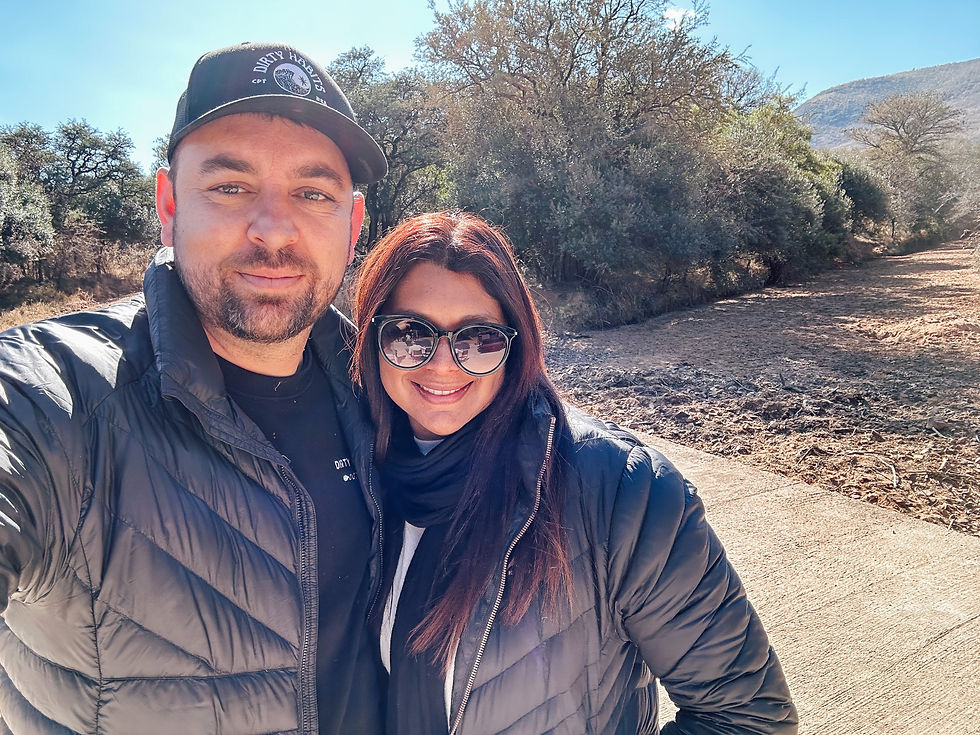
Craig Howes is a professional safari photographer, filmmaker, and the founding editor of African Safari Mag. He has travelled and photographed extensively across the continent's game reserves and wilderness regions, and was named Safari Influencer of the Year in 2020. The judgment in this review reflects a first-hand stay at Babohi, not desk research. You can follow his work on Instagram.
About African Safari Mag
African Safari Mag is an independent editorial platform that helps travellers understand how African safaris actually work, from choosing destinations and seasons to navigating operators, planners, and lodges. We do not book trips, sell safaris, or rank lodges for payment. Our Plan African Safari service routes qualified enquiries to specialists we trust, based on fit.


Comments