
The Best Family Vacations in Africa
Jul 6
10 min read
By Craig Howes, Founder and Editor (about the author). ASM is independent. We don't sell safaris, we help you choose one. Last reviewed July 2026.
The best family vacation in Africa is the one matched to two things: how old your children are, and whether the trip has to be malaria-free. Get those right and the rest follows. Below are the beach escapes, island stays and safari-and-beach combinations worth knowing, with the age and malaria facts stated plainly so you can rule options in or out before you speak to anyone.
Every lodge and resort on this page has been editorially vetted. No company paid for inclusion. Full independence statement at the foot of this guide.

How to think about a family trip before you pick a place
Age is the first filter. The rough map, well established across the field:
Under 6: Many lodges cap standard game drives at age 6, some at 4. The workaround is a private vehicle, which is a cost, not a given. This is the age where malaria-free stops being a preference and becomes a hard requirement, because you do not put a toddler on prophylaxis lightly.
6 to 12: The sweet spot. Around 8 to 12 is often called the golden age for safari, when kids have the stamina for long drives and the attention to absorb them. Most lodge kids' programs are built for this band.
13 and up: Age gates fall away and the question flips from "are we allowed" to "will they be bored." Teens want the activity layer: walking safaris, canoeing, water sports, mountain biking. Malaria-free stops being a hard filter, which reopens the whole East Africa and Kruger map.
Malaria is the second filter. South Africa's Eastern Cape, Madikwe, the Waterberg and the Kalahari are genuinely malaria-free year round. Note the trap: the Sabi Sands, Timbavati and the wider Kruger area are low risk in the dry winter months, not malaria-free. Low risk and malaria-free are different claims, and for a family with young children the difference matters.
Where this guide fits
This is the family vacation guide: beach and island escapes, iconic one-off experiences, and the safari-and-beach combination. If you are choosing a specific family safari, our fit-first guide walks through which safari suits which family, by country and age: Best Family Safaris in Africa. For South Africa in particular, where the malaria-free reserves make it the easiest first safari with young children, see Family Safari South Africa.
Africa family vacations at a glance
Property | Where | Malaria | Best for | Sourcing |
LUX Grand Gaube | Mauritius | Free | All ages, beach or post-safari | First-hand (hosted) |
Alphonse Island | Seychelles | Free | Active families, older kids | Verified-editorial |
Azura Benguerra | Mozambique | Risk | Older children, water lovers | Verified-editorial |
Giraffe Manor | Nairobi, Kenya | Negligible | All ages, short add-on | Verified-editorial |
Songa Migrational Camp | Serengeti, Tanzania | Risk | Kids 4+, migration season | Verified-editorial |
Chem Chem | Tanzania | Risk | School-age and up | Verified-editorial |
Solio Lodge | Kenya | Low risk | Wildlife-focused older kids | Verified-editorial |
Somalisa Acacia | Hwange, Zimbabwe | Seasonal risk | Multi-gen, older children | Verified-editorial |
Londolozi Varty | Sabi Sands, South Africa | Low risk, not free | Cubs Den families, dry season | Verified-editorial |
Beach and island family escapes
LUX Grand Gaube, Mauritius
Malaria-free Mauritius, on a beach in Grand Gaube. Spacious villas give families room, the beachfront is calm and shallow enough for young swimmers, and the kids' activity offering runs through the day. It is a resort holiday, not a safari, and it pairs naturally with a South African bush trip for families who want both.
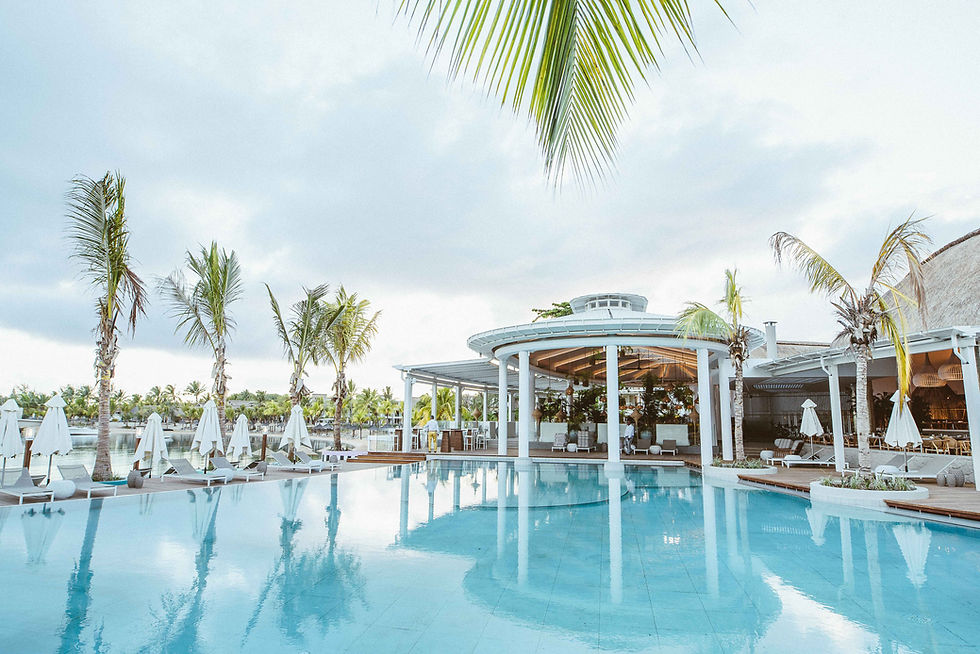
ASM insight (first-hand): I stayed at LUX Grand Gaube in 2018, there on a photography and content assignment. It was a hosted stay, disclosed here for transparency. I was there as a couple, not with my own children, so this is an observer's read rather than a parent's. What stood out was how much the resort actually lays on for families. There were young children everywhere and a genuine amount put on to keep them occupied, which is not something every "family-friendly" resort backs up in practice.
Best for: all ages; families wanting a beach holiday or a post-safari wind-down.
Trade-off: it is a resort, not an adventure. Families who want wildlife will need to pair it with a safari. Malaria: free. Sourcing: first-hand (hosted, disclosed).
Alphonse Island, Seychelles
A remote island in the malaria-free Seychelles, best known for its fly-fishing and diving. The family appeal is real but specific: snorkelling, cycling the island, nature walks and the giant tortoises.

Best for: active families and older children who will use the water and outdoor activities. Trade-off: no big-resort kids' club structure, so it suits self-directed families more than those wanting organised childcare.
Malaria: free. Sourcing: verified-editorial.
Azura Benguerra, Mozambique
A barefoot-luxury island lodge in the Bazaruto Archipelago, with family villas and superb marine life for snorkelling and sailing.

Best for: families with older children comfortable making their own fun on the water.
Trade-off: the Bazaruto islands lean toward couples and quiet escapes, and there is no dedicated kids' club here.
Malaria: precautions required. Sourcing: verified-editorial.
Giraffe Manor, Nairobi, Kenya
Not a safari lodge and not a beach, but one of the most memorable single experiences in Africa for children: resident Rothschild's giraffes that put their heads through the windows at breakfast. A one or two-night stay on the way in or out of a Kenyan safari, in leafy Nairobi where malaria risk is negligible.
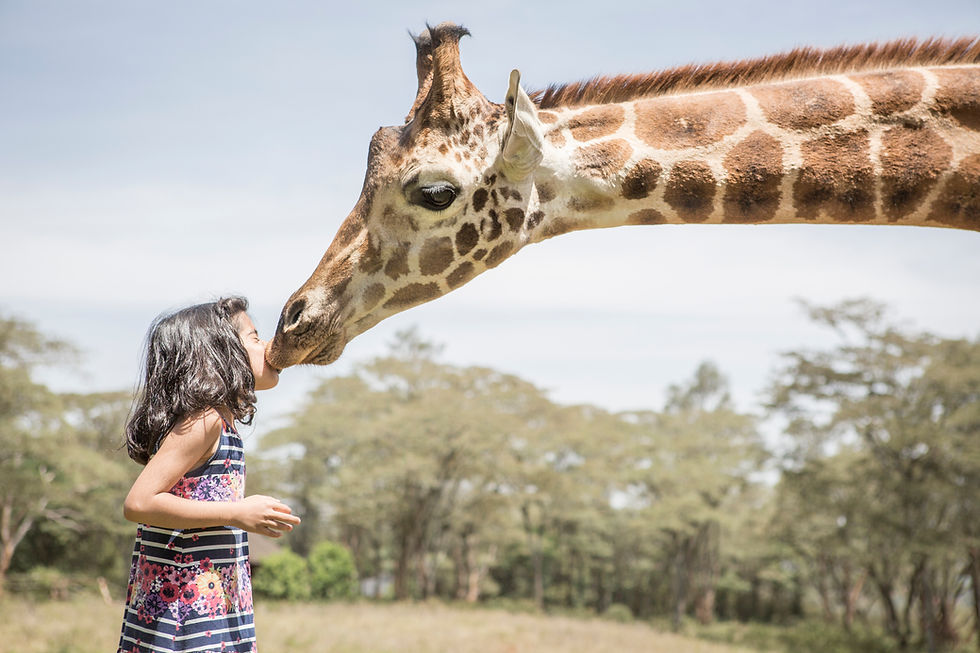
Best for: all ages, as a short and high-impact add-on.
Trade-off: it books out far ahead and rates are high for what is a brief stay; it works as a moment, not a base.
Malaria: negligible in Nairobi. Sourcing: verified-editorial.
Classic safari lodges to pair with the beach
These are strong family safari experiences in wildlife-rich areas that are not malaria-free, so they suit families with older children, or younger children on medical advice. For the full fit-first comparison, and for South Africa specifically, use the two guides linked above.
Songa Migrational Camp, Serengeti, Tanzania
A mobile camp that moves twice a year to follow the Great Migration, north to Kogatende for the Mara River crossings, south to the Maswa calving grounds. Every booking includes a private guide and vehicle. Pairs well with Zanzibar.

Best for: children from age 4, at their best in migration season.
Trade-off: the family tent is only available from roughly mid-December to early January, so a family wanting to sleep under one roof at other times is better suited elsewhere.
Malaria: precautions required. Sourcing: verified-editorial.
Chem Chem, Tanzania
A private lodge between Lake Manyara and Tarangire, an intimate base for walking safaris and cultural visits alongside game drives. Quieter and more personal than the big-name parks. An easy pairing with Zanzibar.

Best for: a first safari with children old enough for the bush.
Trade-off: the intimacy that makes it work for families also means fewer facilities than a big lodge.
Malaria: precautions required. Sourcing: verified-editorial.
Solio Lodge, Kenya
A small lodge on a private rhino conservancy between the Aberdares and Mount Kenya, one of the best places in Kenya to see both black and white rhino. Combines with Diani Beach or the Kenyan coast.

Best for: children old enough to appreciate a wildlife and conservation focus.
Trade-off: the highland setting keeps malaria risk low rather than absent; confirm the current position with the property.
Malaria: low risk, precautions advised. Sourcing: verified-editorial.
Somalisa Acacia, Hwange, Zimbabwe
An African Bush Camps property under a grove of acacias in Hwange, positioned for families and multi-generational travel, with interconnecting family tents. Hwange's elephant density is a genuine draw. Pairs with a Victoria Falls stop.

Best for: multi-generational groups and older children.
Trade-off: seasonal malaria risk means it needs medical planning for young children.
Malaria: seasonal risk, precautions required. Sourcing: verified-editorial.
Londolozi Varty Camp, Sabi Sands, South Africa
Londolozi's family camp in the Sabi Sands, with the well-regarded Cubs Den children's program and some of the best leopard viewing anywhere.

Best for: families using the Cubs Den program, best in the dry winter months.
Trade-off: the Sabi Sands is low malaria risk in dry season, not malaria-free; for malaria-free South African family options, see our South Africa family safari guide.
Malaria: low risk, not malaria-free. Sourcing: verified-editorial.
How to choose
Start with your children's ages and whether malaria-free is a hard requirement. Under 6, lead with a malaria-free option and expect to book a private vehicle. From 6 to 12, almost everything opens up. With teens, weight the activity layer over the age policy. Then decide the shape: a straight beach holiday, a safari on its own, or the combination, which is a short internal flight between the two halves and the most common family trip on the continent.

What it costs
Prices vary widely by country, lodge, length and season. A mid-range safari commonly runs $3,000 to $7,000 per person, with luxury and private-villa options higher, and beach resorts priced separately. Family rates, child discounts and sharing arrangements move the number a lot, which is worth pricing properly rather than guessing.
How we chose these
Every property here was assessed against a single test: does it genuinely work for families, and can we say why, honestly. Where we have stayed somewhere, we say so and disclose any hosting; that content is labelled first-hand. Everything else is verified-editorial, drawn from research and cross-checked, and carries a factual Best for and Trade-off rather than a rating we have not earned. We do not attach star ratings or verdict boxes to properties we have not experienced firsthand. No company paid to appear on this page.
Plan your family trip
If you are not sure how to put a family trip like this together, matching places to your children's ages, sorting malaria-free where it matters, sequencing bush and beach, that is exactly what an independent planner earns their keep on. We can match you to the right one for your brief.
You can also ask Savannah, our safari concierge, anything about these properties or how to combine them.
Family vacation questions, answered
What is the best age to take kids on safari in Africa?
Around 8 to 12 is often called the golden age: old enough for the stamina and attention a safari asks, young enough to be thrilled by it. Many lodges set a minimum of 6 for standard game drives, some 4, and under that age you will usually need a private vehicle so your family can set its own pace.
Which African country is best for a family with toddlers?
South Africa, above all for its malaria-free reserves in the Eastern Cape, Madikwe, the Waterberg and the Kalahari, which let you take a young child on safari without malaria medication. Our South Africa family safari guide covers the specific malaria-free lodges worth booking.
Which family trips are genuinely malaria-free?
Genuinely malaria-free areas include the Eastern Cape, Madikwe, the Waterberg, the Kalahari and Pilanesberg in South Africa, plus island destinations like Mauritius and the Seychelles. Watch the common mistake: the Sabi Sands, Timbavati and the wider Kruger area are low malaria risk in the dry winter months, not malaria-free.
Can you combine a safari and a beach holiday in Africa?
Yes, and it is one of the most popular family trips on the continent. Common pairings: a malaria-free South African safari with Mauritius or Cape Town; a Kenyan safari with Diani Beach; a Tanzanian safari with Zanzibar. The two halves are usually a short internal flight apart.
How much does a family trip to Africa cost?
It varies widely by country, lodge, length and season. A mid-range safari commonly runs $3,000 to $7,000 per person, with luxury and private-villa options higher, and beach resorts priced separately.
A note from the founder.
I have spent years on the ground across Africa with a camera, and the honest truth about family travel here is that "family-friendly" gets stamped on far too many places that have not thought it through. This guide only says a property works for families where the facts back it up, and it tells you plainly when a place suits older kids rather than toddlers, or when malaria means it is not a young-family trip at all. That is the whole point of ASM: judgment you can actually plan around.
About the Author
Craig Howes is the Founder and Editor of African Safari Mag. A filmmaker and photographer named Safari Influencer of the Year in 2020, he has travelled and shot across multiple safari countries and reports from the field firsthand. Where his own stays inform a page, they are labelled and any hosting is disclosed.
About African Safari Mag
African Safari Mag is an independent editorial safari authority. We do not sell safaris. Every lodge and resort on this page has been editorially vetted, and no company paid for inclusion. When we match you to a planner through our planning service, we may earn a commission if you go on to book, at no additional cost to you. That commission never decides which properties appear here or what we say about them. Where we have firsthand experience of a place, we say so and disclose any hosting. Everything else is verified-editorial research.


Comments