
Best Luxury Safari Companies in Africa (2026): An Honest Guide
Feb 10
17 min read
Updated: Aug 25
By Craig Howes, Founder and Editor. Companies are editorially vetted before they appear on this page; commercial partnerships never decide who makes the list. Full disclosure at the bottom of this guide.
The best luxury safari companies fall into two groups: bespoke planners such as Go2Africa, Travel Beyond and Yellow Zebra Safaris, who design multi-camp itineraries across independent lodges, and operators and lodge brands such as Micato, &Beyond and Wilderness, who run the experience themselves. At the luxury tier, roughly $900 to $1,500 per person per night, choose on planning depth, honest trade-offs and on-the-ground accountability rather than brochure polish.
If you've arrived from our main guide to the best African safari tour companies, this page goes deeper on one tier: the luxury bracket, who serves it best, and how to pick between them.

What "luxury" means here (and when you've outgrown this page)
Luxury, on this page, means roughly $900 to $1,500 per person per night. At this level you're paying for prime locations, experienced guides, small guest numbers and polished, personal service. It's the tier where most high-end safaris actually happen.
Above it sits a different market. From around $1,800 per night and climbing past $5,000, you're buying space, silence and time: vast private concessions, exclusive-use villas, private guiding, light-aircraft access. Operators like Singita live almost entirely in that world. If that's the trip you're pricing, our guide to the best ultra-luxury safari companies covers it properly. This page hands over there and doesn't compete with it.
Not sure which of these is right for you? That's the point of this page.
Every company here is excellent. That's exactly what makes the choice hard. The best luxury safari company isn't the same for everyone, because there are different kinds of traveller and different kinds of luxury. Someone who wants a founder to design their trip as a story needs a different company from someone handling a complex multi-country itinerary, who needs a different company again from someone who wants to be hosted end to end, or left alone in a remote camp on a private concession.
We match travellers to the right fit based on what they actually want: budget, destinations, pace, how much you want handled, and the kind of experience you're after. It's free, it's human, and we only route to companies we've vetted. Already holding a quote from one of them? Send it over and we will give you an independent read before you commit.
Prefer to think it through first? Savannah, our AI safari concierge, can help you narrow the field, compare destinations and pressure-test ideas before you talk to anyone.
Jump to:

The list at a glance
Prices are indicative lodging bands in USD per person per night, all-inclusive, before international flights. Exchange rates and season move these numbers; treat them as orientation, not quotes.
Company | Type | Strongest regions | Indicative band | Best for |
Go2Africa | Bespoke planner | Pan-Africa, Southern Africa depth | $900-1,500 | Multi-country trips with expert hand-holding |
Travel Beyond | Bespoke planner | Botswana, Southern Africa | $900-1,500+ | US travellers wanting commission-free advice |
Yellow Zebra Safaris | Bespoke planner | East Africa, Botswana | $900-1,500 | First safaris planned by ex-guides |
Extraordinary Journeys | Bespoke planner | Kenya, East Africa | $900-1,500 | Personal, founder-led East Africa trips |
Stanley Safaris | Bespoke planner | Southern Africa, Kenya, Zambia | $1,000-1,800 | Experiential, adventure-forward luxury |
Scott Dunn | Bespoke planner | Pan-Africa plus beach | $900-1,500 | Safari and beach combinations, families |
Audley Travel | Bespoke planner | Pan-Africa | $800-1,400 | Structured tailor-made planning at scale |
Rothschild Safaris | Bespoke planner | East and Southern Africa | $900-1,500+ | Founder-led storytelling itineraries |
The Luxury Safari Company | Bespoke planner | Pan-Africa, riding safaris | $900-1,500+ | Off-grid and horseback specialists |
Micato Safaris | Tour operator | Kenya, Tanzania, Southern Africa | $1,200-1,800+ | White-glove, fully hosted, all-inclusive |
Abercrombie & Kent | Tour operator | Pan-Africa | $1,000-1,600 | Polished logistics with owned ground teams |
Natural Habitat Adventures | Tour operator | Botswana, East Africa | $900-1,400 | Wildlife-first small group expeditions |
&Beyond | Lodge brand | South Africa, Tanzania, Botswana | $900-2,000+ | Staying inside one conservation-led portfolio |
Wilderness | Lodge brand | Botswana, Namibia, Rwanda | $900-2,000+ | Remote camps on private concessions |
Shortlisted two or three?
The table is where most people stall, and for a good reason: every company on it is excellent, so the differences that decide it now are about fit, not quality. Who suits a first safari versus a fifth. Who is built for a complex multi-country route. Who will leave you alone in a remote camp versus host you end to end. Tell us what you are weighing and how you actually travel, and we will tell you who fits. It is free, it is human, and we only route to companies we have vetted.
Bespoke planners and safari travel agents
Planners don't own the camps. They design the trip, book across independent lodges, and stay accountable for the whole journey. For most first and second luxury safaris, this is the right kind of company, because their value is judgment: which camp, which month, which order. You'll typically pay the same rack rate you'd pay booking direct, so the advice is close to free. Our explainer on how safari companies actually work unpacks the economics.
Go2Africa – (Editors Pick)
Best for: multi-country luxury itineraries planned from inside Africa, with expert support from first call to final transfer.
Why they stand out: founded in Cape Town in 1998, Go2Africa plans from the continent it sells. Their Africa-based specialists carry first-hand lodge knowledge and long-standing regional relationships, and it shows in the routing. The recognition matches: winners of the Travel + Leisure World's Best Tour Operators and Safari Outfitters award in 2024, with 21 of their experts named Conde Nast Traveler Top Travel Specialists in 2026, more than any other African operator. The style is consultative and structured: a lot of back-and-forth refinement before anything is booked.
Trade-off: it's a large team model. You get depth and coverage; you don't get one founder answering your calls for eleven months, which some travellers at this tier specifically want. If that's you, look at the boutique planners below.
Signal: verified editorial. Visit Go2Africa
“Go2Africa made planning our safari effortless, and the itinerary was perfectly designed for us.”

Travel Beyond
Best for: US-based travellers who want planning advice with the sales incentive removed.
Why they stand out: founded in 1975 as the first US company planning luxury safaris to Africa, and named the number 1 safari outfitter in the 2025 Travel + Leisure World's Best Awards. Their consultants are salaried, with no commissioned salespeople, which is rarer in this industry than it should be and changes what gets recommended to you. Expect a calm, methodical planning rhythm and a debrief call after you're home, the mark of a company that treats each trip as a relationship.
Trade-off: everything is bespoke, so there are no scheduled group departures to join, and their planning rhythm runs on US hours.
Signal: verified editorial.

Yellow Zebra Safaris
Best for: first-time luxury safari-goers who want their trip designed by people who have actually guided.
Why they stand out: their specialists are ex-professional guides and camp managers, or people who grew up in Africa, and it shows in the itineraries. Around 1,600 Trustpilot reviews at a 4.9 rating, eleven consecutive years as Europe's Leading Safari Tour Operator at the World Travel Awards, and in-house 24/7 medical support while you travel. The planning style is thorough and hand-held, heavy on video and photo proposals, built to take the fear out of a first big trip.
Trade-off: they serve a wide budget range, not just luxury, so make it clear from your first call that you're buying at the top of their book, and push for the camps their ex-guides personally rate rather than the safe defaults.
Signal: verified editorial.
Extraordinary Journeys
Best for: travellers who want a founder-led, personal planning relationship, especially for Kenya and East Africa.
Why they stand out: founded in 2009 by Marcia and Elizabeth Gordon, a mother-daughter team with deep Kenya roots, and it still feels that way: a 4.9 rating on SafariBookings and a 5.0 aggregate across roughly two hundred Google reviews, with clients repeatedly describing planning that feels personal rather than processed. The style is warm and unhurried, closer to planning a trip with a well-travelled friend than filling a brief.
Trade-off: a smaller team means peak-season response times can stretch. If you need same-day answers in July, say so upfront.
Signal: verified editorial.
Stanley Safaris
Best for: experiential, adventure-forward luxury: walking, water, helicopters, and camps chosen for exclusivity rather than fame.
Why they stand out: founder-led by Shaun Stanley and ranked number 4 in the world in Travel + Leisure's 2025 World's Best safari outfitter awards. Their itineraries lean into doing rather than watching, with a bias toward private conservancies and quieter areas. The style is adventurous and hands-on, built for people who want to be out in it, on foot, on water, in the air, rather than beside the pool.
Trade-off: a deliberately small operation. Capacity is limited, and the style suits travellers who want to be out in it more than beside the pool.
Signal: verified editorial.
Scott Dunn
Best for: safari plus beach, and families who want the whole holiday held by one company. Why they stand out: a global tailor-made house with strong Africa programmes, 24/7 in-trip support, and real fluency in pairing the bush with Indian Ocean islands or the Cape. The style is polished and full-service, geared to families and travellers who want the whole holiday, not just the safari, held by one team. (Style read here is inference from public positioning, not first-hand.)
Trade-off: Africa is one region among many for them, so depth varies by consultant. Ask directly how recently yours was on the ground in your destination.
Signal: verified editorial.
Audley Travel
Best for: structured, well-managed tailor-made planning with country specialists.
Why they stand out: the country-specialist model works: you deal with someone whose whole job is your destination, backed by the systems of a large tailor-made operator on both sides of the Atlantic. The style is systematic and process-driven: excellent machinery, less founder romance. (Style read is inference from public positioning.)
Trade-off: they span mid-range to luxury, and the experience is process-driven rather than founder-led. Excellent machinery; less romance.
Signal: verified editorial.
Rothschild Safaris
Best for: travellers who want their trip designed as a story, with a founder's fingerprints on it. Why they stand out: founder-led by Leora Rothschild, US-based, with a long record of immersive East and Southern Africa itineraries and a repeat-client culture that speaks for itself. The style is narrative and design-led, itineraries built as stories rather than checklists. (Style read is inference from public positioning.)
Trade-off: boutique capacity. Book early for peak season, and expect a planning conversation rather than an instant quote.
Signal: verified editorial.
The Luxury Safari Company
Best for: off-grid, characterful itineraries, and Africa's best riding safaris.
Why they stand out: founded in 2010 by Rose Hipwood, this UK boutique has spent fifteen years in one lane: wild, exclusive, personally known camps, with a horseback specialism almost nobody else matches, and over 300 five-star reviews behind it. The style is characterful and personally curated, at its best when the trip is unconventional. (Style read is inference from public positioning.)
Trade-off: a small team with a specific taste. If you want a conventional lodge circuit, plenty of companies do that; this one is at its best when you want the unconventional. Signal: verified editorial.

Luxury tour operators
Operators run the trip themselves: their people, their vehicles, often their guides, sometimes door to door. You're buying consistency and hosting rather than a curated spread of independent camps.
Micato Safaris
Best for: fully hosted, white-glove East Africa, with everything down to gratuities handled before you land.
Why they stand out: a family-owned operator repeatedly voted the number 1 World's Best Safari Outfitter by Travel + Leisure readers, famous for all-inclusive pricing with a no-tipping policy, safari directors who host rather than just guide, and long-running philanthropy in Nairobi through AmericaShare. The style is fully hosted and family-warm: they treat guests, in their own phrase, like well-loved out-of-town relatives.
Trade-off: this is the top of the luxury band and often beyond it, and the hosted style is the whole model, not a layer you can dial down. If you want an understated, independent lodge-to-lodge trip with minimal hand-holding, this is more company than you're after, and a planner-built itinerary will suit you better.
Signal: verified editorial.
Abercrombie & Kent
Best for: polished multi-country logistics backed by the company's own offices on the ground.
Why they stand out: founded in East Africa in 1962, A&K owns its ground operations across the continent rather than subcontracting them, which is why their trips run with the smoothness of a machine that's been tuned for sixty years. The style is refined and logistically seamless, big-company polish that runs like clockwork.
Trade-off: big-company polish comes with big-company feel. And note their private-jet journeys are a different product at a different tier; if that's your interest, it belongs in our ultra-luxury guide.
Signal: verified editorial.
Natural Habitat Adventures
Best for: wildlife-first travellers who want expert naturalist guiding on a small-group expedition.
Why they stand out: the conservation travel partner of WWF, with expedition-grade guides and itineraries built around animal behaviour and season rather than lodge glamour. The style is expedition-first and naturalist-led: access and expertise over butlers. (Style read is inference from public positioning.)
Trade-off: most departures are scheduled small groups, not fully bespoke, and the style is expedition-first. Luxury here means access and expertise more than butlers.
Signal: verified editorial.

Lodge brands you can book direct
These companies own and run their lodges. Book direct and you're choosing an ecosystem: consistent standards, seamless internal logistics, and a portfolio to move through. The constraint is built in: you're choosing from their properties only, and nobody inside the brand will tell you a competitor's camp suits you better.
The two names that dominate this category, &Beyond and Wilderness, are worth understanding as a pair, because they sit at a similar price and quality but feel different to travel with. Wilderness expresses luxury through land, remote camps on vast private concessions where the wildlife access is the point. &Beyond expresses it through hosting, structured service and experiential polish layered over the day. One feels embedded in the landscape, the other feels curated around you. Both are excellent; the choice is about which you want more. We compare them property by property, including at their ultra tier, in Wilderness vs andBeyond.
&Beyond
Best for: conservation-led travel entirely inside one polished portfolio, across South Africa, Tanzania, Botswana and beyond.
Why they stand out: founded in 1991 as Conservation Corporation Africa, &Beyond pioneered the model of luxury lodges funding conservation at scale, and owns some of the continent's most recognised properties, Phinda and Ngorongoro Crater Lodge among them. Guiding standards are consistently high because they train their own. The style is design-forward and conservation-led, every property built to sit inside the landscape rather than on top of it.
Trade-off: portfolio-only choice, and their flagship lodges price well into ultra territory, where our ultra-luxury guide takes over. For multi-brand itineraries, use a planner and include &Beyond camps where they fit.
Signal: verified editorial.
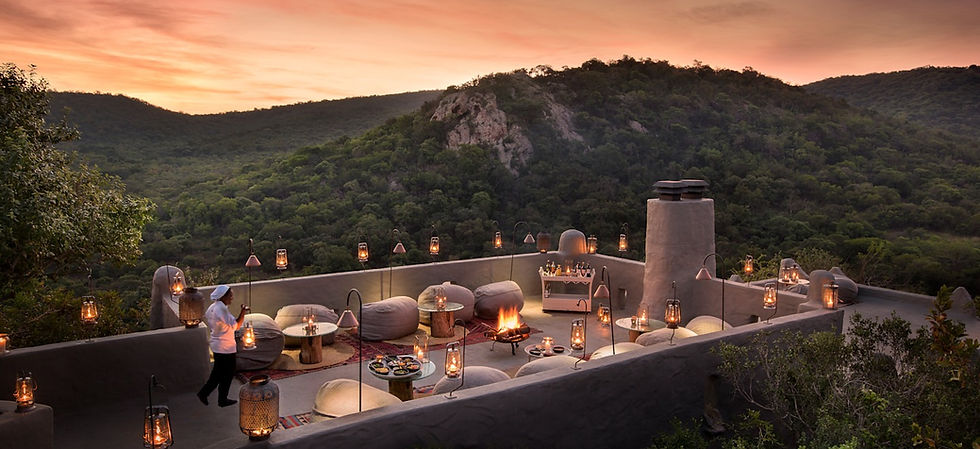
Wilderness
Best for: remote camps on vast private concessions in Botswana, Namibia and Rwanda.
Why they stand out: one of Africa's largest conservation hospitality groups, with camps deliberately placed where crowds can't follow and decades of low-density, high-wilderness operating behind them. The style is remote and understated: the wilderness is the luxury, not the thread count.
Trade-off: the same portfolio constraint, and their premier camps (Mombo is the famous example) sit firmly in the ultra tier. Entry points into the brand exist at the luxury band; the icons cost more.
Signal: verified editorial.

The 4:00 PM Test
Here's the test I apply to every company on this page, and the one I'd urge you to apply to any company you're considering.
It's 4:00 PM. You're at a remote airstrip and the light aircraft that was supposed to take you to your next camp hasn't come. No signal. The lodge staff who dropped you are gone. Somewhere between you and your dinner reservation is a gap that brochures never mention.
Who fixes this? Not tomorrow. Now.
A luxury safari is a chain of small handovers: transfers, charters, border crossings, camp check-ins. What you're actually paying for at this tier is a company that owns the whole chain, knows within minutes when a link breaks, and has someone empowered to fix it before you've finished worrying. When you interview companies, ask the question exactly this way: if my flight doesn't arrive at 4:00 PM, who knows, how do they know, and what happens next? The good ones answer with a system. The rest answer with reassurance.
The truth is, there’s no single “best” company, there’s only the best company for you. - Craig Howes, Editor ASM
How to choose at this tier
Three decisions do most of the work.
Planner, operator, or lodge brand.
If you want choice across the whole market and an advocate who works for you, pick a planner. If you want the trip run and hosted end to end by one company, pick an operator. If one brand's portfolio genuinely covers everything you want, booking the lodge brand direct is clean and simple. Most travellers at this tier are best served by a planner, precisely because the planner's job is to tell you when the famous camp is the wrong camp.
When to go up a tier.
If your non-negotiables are exclusive-use, private guiding throughout, or having a sighting entirely to yourself, you've outgrown this page. That's the ultra tier, it costs what it costs for real reasons, and our ultra-luxury companies guide is written for exactly that decision.
When an agent-led approach fits.
If you already know your destination and mostly want a professional to handle the booking, protect your money and manage logistics, a safari travel agent may serve you better than a full planning relationship. Our guide to the best safari travel agents covers that path.
Bespoke or scheduled small group.
Most of this page assumes a trip built around you, but three companies on the roster also run scheduled luxury group departures: A&K's small group journeys capped at under 20 guests, Micato's Classic Safaris, and Natural Habitat's expedition departures. A group buys price predictability, a set rhythm and company; it costs you flexibility and privacy. It suits solo travellers who want built-in companions and first-timers who'd rather follow a proven route than design one.
And if what you're really optimising for is the experience itself, helicopters, walking, water, private mobile camps, more than the lodge tier, that experiential end of the market has its own guide: our first-class African safari page covers it.
Where you go shapes who you should use. Planners with Southern Africa depth earn their keep in Botswana and South Africa, where camp choice is the whole game; East Africa rewards companies with real conservancy relationships in Kenya and Tanzania. Our country guides go deeper: South Africa, Tanzania, Kenya and Botswana.
What a luxury safari actually costs
The luxury band runs roughly $900 to $1,500 per person per night, all-inclusive: accommodation, meals, drinks, game drives, and usually park and conservation fees. A well-built seven-night, two-camp luxury trip typically lands between $8,000 and $13,000 per person before international flights, with light-aircraft transfers and premium seasons pushing it higher. Exchange rates move these numbers month to month.
Two things worth knowing before you compare quotes. First, planners generally charge you the same rate the lodge would, because they're paid by the lodge, so a good planner's judgment costs you close to nothing. Second, the cheapest quote at this tier is often the one quietly missing something: a road transfer where a flight should be, a shoulder-season camp sold as peak. Our African safari cost guide breaks down the full economics by country and tier.
Not sure which of these companies fits your trip? Tell us where you're leaning and what matters most, and we'll match you with the right planner for your goals. It's free, it's human, and we only route to companies we've vetted. Plan your African safari.

How this list was chosen
Every company on this page was editorially vetted before inclusion: award history verified at source, review patterns read across Trustpilot, SafariBookings, Google and traveller forums, and operating models checked against what they claim. Where I have first-hand experience of destinations, camps or people, I say so; where the assessment is editorial rather than first-person, entries are labelled verified editorial. ASM does not sell trips. Companies cannot pay to be on this list; one company on this page, Go2Africa, is a commercial partner whose placement is disclosed and whose entry carries the same trade-off treatment as everyone else's.

Frequently asked questions
Are luxury safaris worth it?
If guiding quality, location and small guest numbers matter to you, yes. At the luxury tier you're paying for prime traversing areas, experienced guides and camps that hold few enough people that sightings stay personal. What you're not paying for is gold taps. The value is in where you are and who's interpreting it.
What separates the best luxury safari companies from the rest?
Judgment and accountability. The best companies know the camps personally, tell you when the famous option is wrong for you, and own the trip end to end when something breaks. Awards and reviews are useful signals; the 4:00 PM Test above is the sharper one.
Should I use a planner or book directly with a lodge?
For anything involving multiple camps, flights or countries, a planner adds judgment and a single point of accountability, usually at no extra cost to you because lodges pay planners from the same rack rate you'd pay direct. Booking direct works when you're staying inside one lodge group and logistics are simple.
What does a luxury safari cost per night?
Roughly $900 to $1,500 per person per night all-inclusive at this tier, with seven-night trips typically totalling $8,000 to $13,000 per person before international flights. Season, exchange rates and light-aircraft transfers move the number.
What's the difference between luxury and ultra-luxury?
Price is the visible line: luxury runs roughly $900 to $1,500 per person per night, ultra starts around $1,800 and climbs past $5,000. The real difference is what the money buys. Luxury buys comfort and quality; ultra buys space, silence and exclusivity: private concessions, exclusive-use lodges, private guiding. Our ultra-luxury safari companies guide covers that tier properly.
How far in advance should I book a luxury safari?
Nine to twelve months for peak season at sought-after camps, and further out if your trip needs limited permits such as gorilla trekking or exclusive-use properties. Shoulder season is more forgiving, often meaningfully cheaper, and frequently better game viewing than its reputation suggests.
Where are the best luxury safaris?
Botswana's Okavango Delta for exclusivity and water-and-land variety, South Africa's private reserves for guiding polish and reliability of sightings, and Kenya and Tanzania for the great migration and conservancy-based privacy. The right answer depends on the experience you're optimising for, which is exactly the conversation a good planner starts with.
What is the most luxurious safari in South Africa?
The Sabi Sand private reserves and a handful of concession lodges inside Kruger itself hold most of the country's top tier. Our guide to the best luxury safaris in South Africa compares them property by property.
Can I mix planners, operators and lodge brands in one trip?
Yes, and most well-built luxury itineraries do: a planner designing the route, independent and brand-owned camps along it, local operators handling ground legs. The key is one point of accountability. Know who you've contracted with and who answers the phone when plans change.
Are there luxury group safaris?
Yes. Several top companies run scheduled small-group luxury departures alongside bespoke planning: A&K's small group journeys are capped at under 20 guests, Micato runs its Classic Safaris, and Natural Habitat's expeditions travel in small groups with expert naturalists. Groups trade flexibility and privacy for price predictability and company, which suits solo travellers and first-timers especially well.
Still deciding? That is what we are for.
You have just read more about luxury safari companies than most travellers ever will. If you are still torn between two or three of them, that is not a research failure. It is the point where someone who knows these companies, and has no stake in which one you pick, should weigh in. Tell us what you are planning and we will match you to the right one.
A note from the founder (Craig Howes)
I've spent my life in the bush, from a childhood in Hoedspruit on Kruger's doorstep to filming across Botswana, Kenya, Namibia, Zambia and Zimbabwe. I built this page for the trip where the stakes are high and the marketing all sounds the same. Every company here earned its place editorially. If you want a second opinion on your shortlist, that's what Plan African Safari is for. And if you'd rather think out loud first, Savannah, our AI safari concierge, is available around the clock to compare destinations, estimate costs and pressure-test ideas before you talk to a human.

About this guide
African Safari Mag is an independent editorial publication. We don't sell safaris; we help you decide, then route you to vetted specialists. Companies are selected for this page on editorial merit only. Go2Africa is a commercial partner of ASM; their placement on this page is paid visibility within an editorial frame they qualified for independently, and their entry carries the same honest trade-off treatment as every other company listed. No other company on this page has any commercial relationship with ASM. Last reviewed: 06 July 2026. Questions about our standards? Our editorial and disclosure policies are linked in the site footer.


Comments