
Best Great Migration Safari Companies for 2027/2028: An Honest, Independent Guide
Aug 24
20 min read
By Craig Howes, Founder and Editor. Every company on this page has been editorially assessed. No company paid for inclusion. Full disclosure at the end of this guide.
The best Great Migration safari company depends on which of four trips you are actually buying: a road-based value circuit through the national parks, a mobile camp that moves with the herd, a permanent lodge positioned at a crossing point, or a fly-in conservancy safari that treats the crossings as one day out rather than the whole point. Companies build these four trips very differently, and two quotes that both say "Great Migration" can be different products separated by ten thousand dollars. This guide is organised around that choice.

One thing to settle before the list, because every honest planner we work with says it first. Nobody can promise you a river crossing. Annie Irankunda, a Kenyan-born safari specialist at Timbuktu Travel, puts it plainly:
"People think the migration is just the crossings. It's not. The crossings are unique and they can happen any time. August is always the best window, but we can't guarantee it. You can't guarantee the movements. You can't control them."
The wildebeest are there in their hundreds of thousands either way. The question a good company answers is not "will I see a crossing" but "will this trip be extraordinary whether or not I do." That is an architecture question, and it is the one this page exists to help you answer.
Where you are in the decision matters. If you are still choosing which side of the border to be on, read our Kenya vs Tanzania comparison first. If you want the season-by-season movement of the herds, our Great Migration guide covers when and where. This page is for the next step: who you actually book with.
Jump to:
PLANNING A MIGRATION SAFARI?
Most of the companies on this page are genuinely good, which is exactly what makes choosing hard: two migration quotes can be $10,000 apart and both be fair, and most people only get one shot at this trip.
This guide breaks the decision into the four ways to do it, with honest trade-offs and real costs. Read: [When and where to see the Great Migration]. And if you would rather not make this call alone, tell us your dates, party and budget and we will match you with a vetted specialist who builds the trip you actually want. Free, no obligation, and you keep the final say.
In brief
If you want the herds followed properly, Nomad Tanzania and Asilia run the classic mobile camps that relocate with the migration. If you want a crossing point on your doorstep at the top of the market, Singita Mara River and Angama Mara are the benchmark pair. If you want quiet drives with the crossings as a day trip, Gamewatchers' Porini camps and the Naboisho conservancy camps are the model. If you want the full circuit at a sane price, Lion King Adventures publishes transparent rates for both migration seasons. And if you want one company to build any of the above around you, the international planners at the bottom of this list do exactly that.
A note before the list. This is not a ranked one-to-ten. Ranking a mobile camp against a road circuit is like ranking a yacht against a train; they are different machines for different travellers. The companies below are grouped by the trip they build. Find your architecture first, then the company.
The four ways to do the migration
Architecture | How it works | Vehicle density | Typical cost | Best for | The trade-off |
Value circuit | National parks, road transfers, broad multi-park exposure | Higher, shared parks | Roughly $350 to $550 pp/day at published mid-range rates | First-timers who want breadth at a fair price | Long road hours, busy sightings, the crossing is a gamble |
Mobile camp | Seasonal camps that physically relocate to follow the herd | Low to moderate | Roughly $1,000 to $1,650 pp/night at published luxury rates | Travellers who want to be genuinely near the action all trip | A single-minded trip built around the migration |
Fixed lodge at a crossing point | Permanent luxury sited where the herds cross | Low at camp, high at the crossing itself | Roughly $1,850 pp/night to $9,000+ per suite | Those who want the crossing on the doorstep without moving camp | Anchored to one zone; the herds may be elsewhere |
Fly-in conservancy | Internal flights, private conservancy base, crossings as a day trip | Lowest | From about $900 to $1,000 pp/night all-in at entry level | Repeat travellers, photographers, anyone road-averse | Higher cost, and the famous crossings still need a reserve-entry day |
Two honest footnotes to that table. The value-circuit figure is built from published operator rates; the fly-in floor is what tailored East Africa trips genuinely start at in peak, all-in with flights and park fees, based on trips we have routed. And the strongest operators now span more than one column, which we flag below, because sometimes the architecture choice is available inside a single company.
Value circuit operators
The road-based circuit gets patronised by the luxury end of this industry, and it should not be. It is the correct answer for a first-timer who wants Tarangire, Ngorongoro and the Serengeti in one trip at a price that does not require remortgaging. Travellers on these trips consistently report excellent wildlife and fair value. The honest trade-offs are real too: multiple three-to-six-hour road transfers, busy sightings at the famous spots, and Ngorongoro's entry queues, which one specialist described to us simply as tons of trucks lined up for the same gate.
Good Earth Tours
The archetype of this tier: a US and Canada based operator running the classic Kenya-Tanzania overland circuit, private by default with your own guide and vehicle, TATO-registered, and strongly reviewed across SafariBookings and Trustpilot.

Best for: first-timers wanting the full two-country circuit privately, at value-to-mid pricing. Trade-offs: it is a road trip, with the border crossing and transfer hours that implies; the recurring critical review theme is logistics under pressure, not wildlife.
Africa Venture Safaris
The budget end, run honestly: Kenya-Tanzania overland with a mix of permanent camps and lodges, publishing around $4,200 per person for twelve days private including peak park fees, and stating plainly that there is no night game on the core route.
Best for: price-led travellers who want maximum ground covered.
Trade-offs: basic accommodation on budget departures, and no after-dark access.
Lion King Adventures
Here on transparency: a TATO-member Tanzanian operator that publishes current prices for both migration windows, roughly $3,635 to $3,940 per person for eight days at the Mara River in crossing season, and around $4,020 to $4,290 for the Ndutu calving season.
Best for: travellers who want to compare real numbers before enquiring, in either season. Trade-offs: Tanzania-only, third-party lodges, so the experience varies with the properties chosen.
If you are comparing this tier broadly, marketplaces aggregate hundreds of these operators with verified reviews; SafariBookings is the one we use for budget comparison.
Mobile camp specialists: camps that follow the herd
This is the architecture built for the migration itself. The camp physically relocates through the year, south for the calving, north for the crossings, so you are near the herds without chasing them from a fixed base.
Nomad Tanzania
The archetype operator. Serengeti Safari Camp was one of the first camps built to shadow the migration and still moves four to five times a year, six tents, open year-round, with a southern base for the calving season. ATTA-member.

Best for: purists who want the original mobile-camp experience, small and unfussy.
Trade-offs: rustic by design, and rates are on application rather than published.
Asilia Africa
Asilia operates mobile camps whose positions track the seasons; the same camp our readers book in the south for the February calving repositions north for the July-to-October crossings. Their guiding is consistently singled out by the specialists we interviewed.

Best for: travellers who want mobile-camp positioning with a more polished camp standard. Trade-offs: premium pricing, and in peak the northern positions book out far ahead.
andBeyond
andBeyond spans two columns: Serengeti Under Canvas is a true mobile camp using private campsites, published at $1,080 to $1,640 per person per night by season, while Kichwa Tembo gives them a fixed Mara-side base. They are also one of only two companies on this page with verified guide investment, having trained their own guides through in-house guide schools since 1996.

Best for: travellers who want mobile positioning with luxury polish, or a two-country combination under one brand.
Trade-offs: the price of that polish; the mobile camp experience is deliberately unplugged.
Great Migration Camps
The pure-play version: fully self-sufficient mobile camps that will position anywhere in the Serengeti to be near the herds, strongly reviewed by guests for exactly that mobility.
Best for: travellers whose whole trip is the migration and who want maximum positional flexibility.
Trade-offs: a young, single-purpose operation; expect a camp built for position rather than spa-level comfort, and confirm current pricing directly.
Fixed premium lodges at crossing points
The opposite bet: instead of moving with the herds, you base permanently where the crossings happen and let the season come to you. When it works, you can watch a crossing from the deck. The honest caveat is in the table above: you are anchored, and the herds are not.
Singita Mara River Tented Camp
In the Lamai wedge of the far northern Serengeti, six suites on a vast private concession near the northern crossings, published at $9,660 per suite per night. This is the top of the market.

Best for: those who want the crossing zone with near-total exclusivity.
Trade-offs: the price, and a remote single-zone position that makes sense in crossing season above all.
Angama Mara
Angama takes the Kenya-side version of the bet from the escarpment above the Mara Triangle, two camps of fifteen suites each, published at $1,850 to $2,750 per person per night by season, with a smaller camp down in the Triangle itself. The specialists we spoke to rate its guiding as uniformly excellent, and its position lets you drive down for the migration without living in the crowd.

Best for: crossing-season access with a view, strong guiding, and conservation substance behind the luxury.
Trade-offs: it operates in the reserve system, so the busiest zones are shared; this is not a private-conservancy access model. We compare the two headline crossing-point lodges directly in Singita Mara River vs Angama Mara.
Lemala Kuria Hills Lodge
The northern Serengeti's quieter premium option in the Wogakuria hills near the Mara River, part of a Tanzanian group one East Africa specialist described to us as "really authentic, no fuss, and they do come at a premium." A confirmed trip we routed for August 2027 anchors three crossing-window nights here.

Best for: crossing-season positioning with less brand fanfare than the headline names.
Trade-offs: premium pricing, and less name recognition to lean on when comparing quotes.
Wilderness
Wilderness spans both columns like andBeyond: Wilderness Mara is a fixed twelve-tent camp in the Mara Triangle, while Usawa Serengeti is a genuine six-tent mobile camp, published at $950 to $1,540 per person per night.
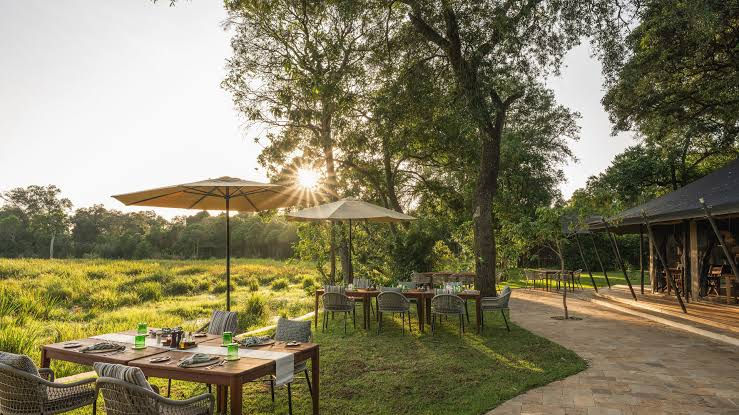
Best for: travellers choosing between fixed and mobile who want one operator's standard across both.
Trade-offs: Usawa is new enough that its track record is still building; Kenya-side pricing is on application.
Fly-in conservancy specialists
The architecture Steve-from-our-inbox never had explained to him, and the one the premium end of the market now defaults to. You base in a private conservancy where vehicle numbers are capped, night drives and walks are allowed, and the bulk of your drives are quiet. The famous crossings become a planned day trip into the reserve.
As Annie puts it: "Private conservancies are the way to go. You have a river right there, and you may get lucky and see them cross right in the river you're staying in."
The honest caveat, confirmed to us independently by two operators: the celebrated crossing zones are generally not beside the conservancy camps, so a crossing attempt still means a reserve-entry day among the vehicles.
Gamewatchers Safaris (Porini Camps)
Gamewatchers and its Porini camps own the architecture on the Kenya side: small owned camps in the Olare Motorogi and Ol Kinyei conservancies, KATO-bonded, with night-drive and off-road access, and a reserve-entry day built into peak-season itineraries specifically to look for crossings.
Best for: first-time conservancy travellers who want the quiet-drives-plus-crossing-day structure done by the book.
Trade-offs: fixed camps, Kenya-side only, and conservancy fees on top of camp rates.
Basecamp Explorer (Saruni Basecamp)
Basecamp runs the Naboisho conservancy version, with night drives, walking and fly-camping, at published rates around $400 to $800 per person per night, which makes it the accessible door into this architecture. A confirmed family trip we routed for July 2027 pairs three Naboisho nights with a mobile camp at the northern crossings, which is this architecture and the previous one combined in a single booking.
Best for: conservancy access without top-tier pricing; strong for families.
Trade-offs: the crossing day is a long drive; the camps are comfortable rather than opulent.
Serian
Serian bridges Kenya and Tanzania: intimate fixed camps in Mara North (Ngare Serian has four tents) with a private vehicle, guide and spotter on every booking, plus seasonal Tanzania camps including a crossing-season position in the Lamai area.
Best for: privacy-first travellers who want their own vehicle as standard.
Trade-offs: tiny camps book out early, rates are on application, and their own material is honest that reserve fees and drive time apply for the famous crossings.
International planners: companies that build any of the four
Google's AI summary of this market repeats a piece of received wisdom worth correcting: that the best companies are the ones that own their camps. Ownership matters, and the own-camp operators above prove it. But a strong planner assembling third-party camps around you can out-build any single operator's inventory, because they are not limited to their own product. What separates a good one is knowledge of the ground and honesty about trade-offs, not a title deed.

Micato Safaris
The ultra-luxury benchmark, with published trips from roughly $25,000 to $40,000 per person and the second verified guide-investment story on this page: their Kenya Safari Directors hold KPSGA Silver certification.
Best for: fully hosted, top-tier trips where the guiding credential is documented.
Trade-offs: the price, and mostly third-party camps, so ask exactly which properties your itinerary uses.
Abercrombie & Kent
A&K pairs tailor-made planning with its own Sanctuary properties, and carries the strongest financial-protection signal in this guide as a USTOA member, which requires a million-dollar security bond.
Best for: travellers who weight financial protection and long institutional track record.
Trade-offs: quote-led pricing, so comparison takes more work.
Natural Habitat Adventures
The unusual planner that owns product: a private mobile camp in Tanzania and private-reserve access in Kenya with walks, off-road and night drives, published around $23,000 per person for fourteen days, with a formal WWF partnership and one of the largest verified review bases in this market.
Best for: conservation-minded travellers who want planner convenience with owned-camp access.
Trade-offs: small-group departures on set dates rather than fully bespoke.
Go2Africa
The established multi-country planner whose migration expertise the search engines themselves keep citing; a large consultant team and a long Kenya-Tanzania track record. Best for: travellers who want a big, established planning operation across both countries. Trade-offs: scale means your experience turns on the individual consultant, so interview them.
Timbuktu Travel
The planner whose migration work we know best first-hand: more of the migration trips in our routed-booking records run through Timbuktu than any other company, across every architecture on this page, from road-based calving circuits to crossing-window fly-ins and the two-country combination. Their particular skill is building the most trip a stated budget can carry rather than upselling past it. Timbuktu is among the partners we route reader enquiries to; full disclosure at the end of this guide.
Best for: tailor-made migration trips at any budget tier, including budgets below the threshold most luxury planners prefer.
Trade-offs: no owned camps, product assembled through regional ground operators, and your experience turns on the consultant you land with.
Stanley Safaris
The boutique counterpoint, ranked fourth in Travel + Leisure's World's Best safari operators for 2025, building high-touch East Africa trips including crossing-zone positions in the northern Serengeti.
Best for: travellers who want founder-level attention on a premium migration trip.
Trade-offs: a small team with finite capacity, so lead times matter.
How these companies were chosen
Three filters, applied the same way to every name above. First, verifiable substance: registered trade-body membership where claimed (KATO, TATO, ATTA, USTOA), published or documented pricing, and independently reviewed delivery. Where we could not verify a claim, we either left it out or said so.
Second, architectural honesty: companies earn inclusion by being clear about what their trip is and is not, which is why every entry carries a trade-off line. Third, fit over fame: the travellers' forums that Google's AI now paraphrases praise own-camp operators with permanent guides, and at the top end they are right; but only two companies on this page have documented guide-investment programmes (andBeyond's guide schools and Micato's KPSGA certification), and some of the best value trips in East Africa are run by ground operators who own nothing but their vehicles and their reputation. We assess the trip, not the title deed.
We also talk to the people who build these trips for a living. This guide draws on interviews with specialists at Timbuktu Travel, a tailor-made operator that is among the vetted partners we route reader enquiries to, alongside our own routed-trip records and traveller debriefs. No interview bought anyone a placement.
Kenya or Tanzania for the migration?
Both, is the honest answer, because it is one ecosystem and the herds do not respect the border. If you are forcing a choice: the classic river-crossing imagery is Mara-side, and Kenya has more camp options close to the crossing zones, which is why Annie's answer, budget aside, is the Mara: "If you want to see the proper Mara River crossing, it's going to be on the Mara side, and Kenya has more options.

The landscape is better for it." Tanzania counters with the vast northern Serengeti, the western corridor, and the entire calving season in the south. For travellers set on the spectacle, her practical prescription is the combination: three or four nights Mara-side, two nights northern Serengeti, two angles on the same river system.
One confirmed trip we routed for July 2027 does exactly that. The full decision is its own article: Kenya vs Tanzania.
What a migration safari actually costs
The architecture sets the price, which is why two migration quotes can be $10,000 apart for the same dates. Published mid-range road circuits run roughly $3,600 to $4,300 per person for eight to twelve days, and a verified competing quote we reviewed for a private, all-in Kenya-Tanzania road circuit landed within a few percent of the $878 routed trip marked on the figure below. Tailored fly-in trips genuinely start around $900 to $1,000 per person per night all-in, flights and park fees included, and the confirmed crossing-window trips we have routed land between roughly $1,900 and $2,100 per person per night all-in once internal aircraft are absorbed.
Published luxury camp rates run $950 to $2,750 per person per night depending on brand and season, with the exclusive top end far beyond that. Park and conservancy fees are substantial and vary by reserve; they are usually inside a quote, but always confirm. Country-level breakdowns live in our cost guides: Tanzania safari costs, Kenya safari costs, and the African safari cost overview.

Will you actually see a crossing?
Maybe. That is the truthful answer, and any company that promises otherwise is telling you something about themselves. Crossings cluster between July and October but happen on no schedule; Annie has seen them in early July and even late June, "which is completely off." What you control is the architecture around the lottery.

The specialists we interviewed described the two working mechanisms. On the Tanzania side, some operators deliberately position crossing-season camps forty-five minutes to an hour from the river, so guests drive in for a crossing attempt, take it or miss it, and return to quiet drives away from the congestion. On the Kenya side, the conservancy model does the same job structurally: quiet exclusive drives as the trip's foundation, one planned reserve day for the crossing attempt. Either way the trip stands on its own; the crossing becomes upside rather than the load-bearing wall. Expect company at the river itself. Ten to twenty vehicles around a crossing is normal now, and it gets busier every year.
And when the lottery pays out, it pays out. Timothy Burandt, a reader whose Kenya trip we helped route in July 2026, based at a Mara North conservancy camp and made the reserve dip on one day of a twelve-day trip. His party caught a full crossing.
"This was simply the most magnificent thing we had ever seen, much less ever recorded,"
he wrote to us afterwards; his wife Ali said the day gave her some of her best memories of a lifetime, next to their wedding and the birth of their children. That is what people are chasing, and it is real. It is also luck, and Timothy's trip was built so that the eleven other days did not depend on it.
One more honest note, because a specialist said it to us unprompted and it deserves air: not everyone should chase this. For older travellers who want Africa at a slower pace, the crowds and the churn of crossing season are the wrong trip, and the migration can be appreciated from a single game drive, or skipped entirely for quieter game viewing. Our guide to seeing the migration ethically covers the over-tourism question properly.
How to vet a migration safari company
Five questions do most of the work. Ask who owns the camps on your itinerary, and if the answer is a third party, ask why those properties were chosen over alternatives. Ask whether the guides are permanent staff, freelance, or the camp's own, and whether your vehicle is private or shared; in Tanzania, one private guide driving you camp to camp is often cheaper than per-camp game packages, which surprises almost everyone. Ask what happens to your money if the company fails: KATO and TATO bonding, ATTA membership, or USTOA's security requirement are the signals that a Reddit thread cannot fake. Ask them to walk you through a crossing-season day honestly, including the vehicle numbers; the good ones volunteer it. And ask what they would build for your budget if you dropped the crossings entirely. The quality of that last answer tells you whether they design trips or sell a spectacle.
Frequently asked questions
Is the Great Migration better in Kenya or Tanzania?
Neither owns it; it is one ecosystem. Kenya's Mara side has more camps near the classic crossing zones and the landscape the famous imagery comes from. Tanzania has the scale of the Serengeti and the entire calving season. Travellers set on crossings often do both sides in one trip.
What is the best company for a Great Migration safari?
It depends on the trip you are buying. Mobile-camp specialists like Nomad and Asilia follow the herds. Fixed lodges like Singita Mara River and Angama Mara sit at crossing points. Conservancy operators like Gamewatchers keep your drives quiet with the crossing as a day trip. Value operators like Lion King Adventures run the full circuit at published prices. Match the company to the architecture, not the other way around.
Who is best to book a migration safari with, an operator or a planner?
Own-camp operators give you their product at its best. International planners assemble any product around you and can span both countries. First-timers comparing multiple quotes are usually better served starting with a planner or an independent guide like this one, then going direct once they know what they are buying.
What is the best month to see the Great Migration?
July to October for the river crossings, with August the peak window. Late January to March for the calving in the southern Serengeti, which is the underrated season: dense predator action, far fewer vehicles. Four of the migration trips we routed for February 2027 are built around the calving grounds.
How much does a Great Migration safari cost?
Published road-based circuits run roughly $3,600 to $4,300 per person for eight to twelve days. Tailored fly-in trips start around $900 to $1,000 per person per night all-in, and confirmed crossing-window trips we have routed land between roughly $1,900 and $2,100 per person per night once internal flights are included. Luxury camps publish $950 to $2,750 per person per night, and the exclusive top end runs far higher.
Can any company guarantee I will see a river crossing?
No, and be wary of any that implies it. Crossings happen on no schedule, even in peak season. Good companies build the trip so a crossing is the bonus, not the foundation.
Is the Great Migration worth it?
For the right traveller, absolutely; travellers who catch a crossing describe it as a life memory. But the crossing zones are crowded, the experience is raw, and returning travellers often say they enjoyed their quiet drives most. If you want Africa at a slower pace, there are better trips for the same money.
Mobile camp or lodge for the migration?
Mobile camps trade comfort for position and are the purist's choice for following the herds. Fixed lodges trade position for permanence and polish. The strongest operators, andBeyond and Wilderness among them, now run both, so you can choose the architecture within one brand.
Should I do a group tour or a private safari for the migration?
Group tours share vehicles and fixed schedules and suit tight budgets. Above roughly $25,000 per person, specialists are blunt that a group tour makes no sense: bespoke gives you flexibility a package cannot, at the same tier of camps.
Does August mean I have to be in Kenya?
No. The herds do not all cross, large numbers remain in Tanzania's northern Serengeti through the window, and the Grumeti crossings happen on the Tanzanian side earlier in the season. August favours the Mara, but both sides deliver.
How far in advance should I book?
Crossing-season camps in the best positions sell out twelve to eighteen months ahead, and the confirmed trips in our own records for the 2027 window were booked in mid-2026. For February calving, nine to twelve months is usually enough.
Still unsure?
Nobody can promise you a river crossing. What we can promise is the other half: a company chosen for the trip you actually want, at the budget you actually have, so the one thing you control is decided well. Tell us your dates, party and what you most want from the migration, and we will match you with a vetted specialist. Free, no obligation, and we only earn a commission if you end up booking. Plan My Safari →
A message from our founder
I will tell you what I have not done, because this industry does not do that enough. I have been to the Masai Mara, and I have not yet timed a trip to the migration; I am planning to put that right next season, camera in hand. What I have done is spend years inside this industry, route real migration trips for real travellers, and sit with the quotes they were comparing when the numbers made no sense to them.
The most useful thing I have learned is the premise of this page: the migration decision is an architecture choice wearing a wildlife costume. Get the architecture right and the trip is extraordinary whether or not the herds perform on cue. Get it wrong and you can spend a fortune being tired, crowded and disappointed. Everything above exists so you get it right. — Craig
About this guide
Every company on this page has been editorially assessed. No company paid for inclusion, and no ranking or placement on this page is for sale. Most readers will use this guide to narrow the field and approach companies directly; the Best-for and Trade-off lines under each entry are written for that purpose. If you want help deciding, use Plan African Safari: free, no obligation, and we earn a commission only if a booking results.
This guide draws on interviews with named specialists at Timbuktu Travel. Timbuktu also appears as a listed company above; it is among the vetted partners we route reader enquiries to, we earn a commission when routed bookings complete, and its entry states both facts. Its inclusion rests on our routed-booking records, not on the interviews or the commercial relationship, and no interview bought any company a place on this page.
The SafariBookings link in the value-circuit section is an affiliate link, meaning we may earn a commission on bookings made through it; it did not affect that section's content. Company facts and prices were verified against published sources at the time of writing and reviewed on publication. For the broader field beyond the migration, see our guide to the best African safari tour companies, and our country guides to the best Tanzania safari companies and best Kenya safari companies.
Last reviewed: August 2026.


Comments